
How to Search Criminal Dockets
For an Oktibbeha County felony docket, start with the court and case number. Pull it off any notice, bond paper, or pleading you received. The county offers a subscription Circuit index covering civil and criminal records. The Sixteenth Circuit's MEC path gives registered public users access to eligible electronic filings. Treat both as leads, never as replacements for the Circuit Clerk's actual file. The clerk holds Oktibbeha County Circuit criminal filings, dockets, judgment rolls, and related court papers.
Search by case number when you can. Delta refines results in other ways. It filters by party name, styled defendant, filed date, final-disposition date, docket book and page, file number, and case type. A name search helps when no number is available. Add a court detail or date too. Never trust a name match without one. Justice Court and municipal cases must go through the lower court that holds them. The county offers no single public docket portal for those lower courts.
- Identify the court named on the notice and copy the case or citation number exactly as printed.
- For a Circuit matter, use the Delta index or register for eligible MEC/PAMEC access.
- Use the number first, then narrow a name search with a date, case type, or file detail.
- Read the docket entry for the setting, status, and court action rather than relying on a search-list label alone.
- Ask the responsible clerk for the docket sheet, order, or certified disposition when an official record is needed.
Note: An online result can lag, omit restricted material, or point to the wrong court. Confirm the court and case number before you rely on it. The Sixteenth Circuit MEC landing page identifies the electronic system used for eligible Circuit access.
MEC stays read-only for non-attorney public users. Not every criminal document is available through it.
Oktibbeha County Felony Docket Paths
Felony matters in Oktibbeha County belong in Circuit Court. Circuit Clerk Tony M. Rook is the official records custodian. Three channels exist. Each serves a different need. Delta can supply an index lead. MEC/PAMEC can show eligible electronic docket material once you register. The Circuit Clerk can provide inspection or a court-certified copy. Pick the channel that fits. You may need a case number, a current electronic entry, or an official document.
| Channel | Useful For | Important Limit |
|---|---|---|
| Delta Circuit index | Name, case, date, book/page, and file-number leads | Subscription access; online data is not the official record |
| MEC/PAMEC | Eligible docket sheets, notices, and electronic documents | Registration, page charges, and restricted-file limits apply |
| Circuit Clerk | Inspection, copies, and certified dispositions | Request must identify the case and applicable fee |
Oktibbeha County Circuit Court entered MEC on August 28, 2023, per Sixteenth Circuit CourtInfo. That milestone did not merge Justice Court or municipal records into the Circuit system. It simply marks the electronic path. That path covers eligible Circuit filings in the district. The Sixteenth Circuit CourtInfo record also explains the local MEC rollout and its status vocabulary.
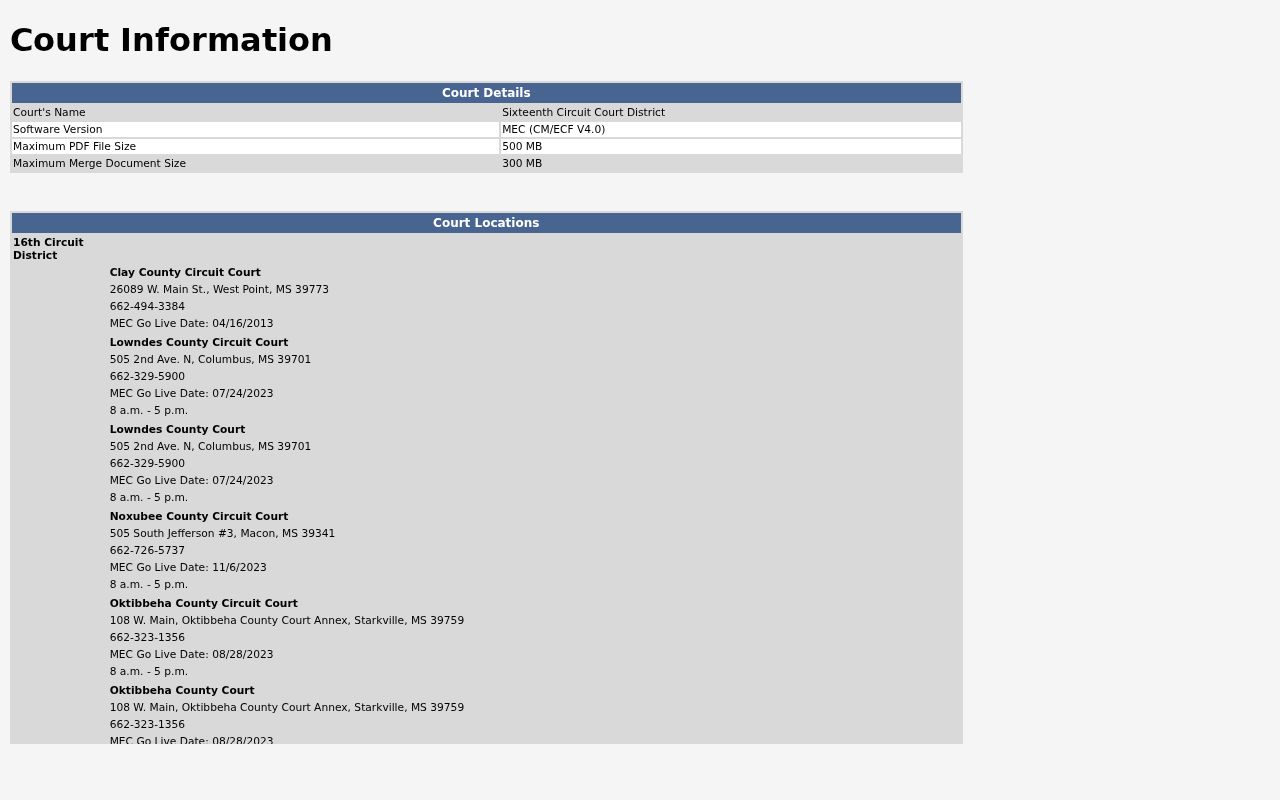
Useful as that is for a careful search. The case docket and clerk record remain the documents to verify.
What a Criminal Docket Shows
An Oktibbeha County criminal docket is a chronology, not the whole case file. It logs identifiers, filings, and settings. Status flags and actions the court entered appear there too. Motions, orders, exhibits, and a certified disposition live in separate records. Financial fields can sit apart from the case events. A balance question may need an official ledger or clerk confirmation.
| Case key | A case number, party search key, file number, or docket book and page. No public local format was documented, so use the number exactly as supplied. |
|---|---|
| Filed and final dates | Dates used to locate and narrow a case; they do not replace the docket's event history. |
| Case type and status | A classification and a system flag, which require the court's context before a legal conclusion is drawn. |
| Settings and entries | Arraignment, pretrial, plea, trial, order, and other events entered in the register. |
| Case code | Use the actual identifier, such as case number from the court notice, rather than creating a substitute format. |
One distinction matters most with an Oktibbeha County criminal docket: a portal label is not the same as a court action. A closed listing flags a status without saying why the case closed. When the basis and date matter, ask for the docket sheet or final order.
Oktibbeha County Criminal Status Flags
Sixteenth Circuit CourtInfo lists labels that can appear in an electronic criminal record. These are case-management terms, not plain-language decisions. Read each label beside the entry date, the docket sheet, and the clerk's explanation so a pending step never reads as a final result.
- Bound Over
- A system flag connected with a transfer or preliminary stage. It is not a Circuit Court judgment.
- Capias Pending
- A pending capias-related status that needs court or clerk context before its effect is described.
- Plea Pending
- A procedural label showing a plea issue remains pending, not a statement that a plea has been accepted.
- Order TBE
- Order to be entered. The label does not establish that the order has already been entered.
- Closed
- A case-management status that should be checked against the docket or final order for its legal basis.
Other flags include probation, nolle pros pending, sealed, and expunged. Each can carry limits a brief result line will not show. Ask the clerk something specific instead: whether a final order, a public docket sheet, or a restricted file exists for that case number.
Stages on a Criminal Docket
A criminal docket grows as papers are filed and the court sets events. An Oktibbeha County Circuit felony starts with filing. It can run through arraignment and pretrial settings to a plea or trial, then disposition and sentencing. Justice Court may hold the earlier steps. Initial appearances, preliminary hearings, bond matters, and misdemeanors often sit there. That can happen before a related felony reaches Circuit Court.
Docket flow: Filing → Arraignment → Pretrial → Plea or Trial → Disposition → Sentencing
A preliminary event is not a final felony judgment. The docket court, entry type, and later Circuit action tell the story. Together they show where the matter stands. Appeals from Justice or municipal court can also land in Circuit Court. From there, a state appellate route may continue. It can reach the Mississippi Court of Appeals or Mississippi Supreme Court.
Oktibbeha County Justice Criminal Routing
Justice Court is its own Oktibbeha County criminal docket path. It handles misdemeanors, preliminary hearings, initial appearances, and felony bond hearings, plus cases brought by the Sheriff, Highway Patrol, constables, wildlife officers, and the Motor Carrier Division. Criminal sessions run Tuesday at 9 a.m. across three justice districts. Confirm any case-specific setting with the Justice Clerk.
Justice Clerk
Shalonda Sykes administers Justice Court docket intake for the three districts at 104 Felix Long Drive, Starkville, MS 39759.
Criminal: 662-324-3040 or 662-324-3032
Where a case lands depends on which agency wrote the ticket or made the arrest. It does not depend on where a person lives. Anything charged by the city of Starkville stays in Starkville Municipal Court. The charge can be criminal, and it still belongs there. Justice Court keeps its own docket for the rest of the county. It offers no online case-search database. So call the clerk with questions about district, court settings, or copies. The county Justice Court page lays out the lower-court criminal work and how to reach the clerk.
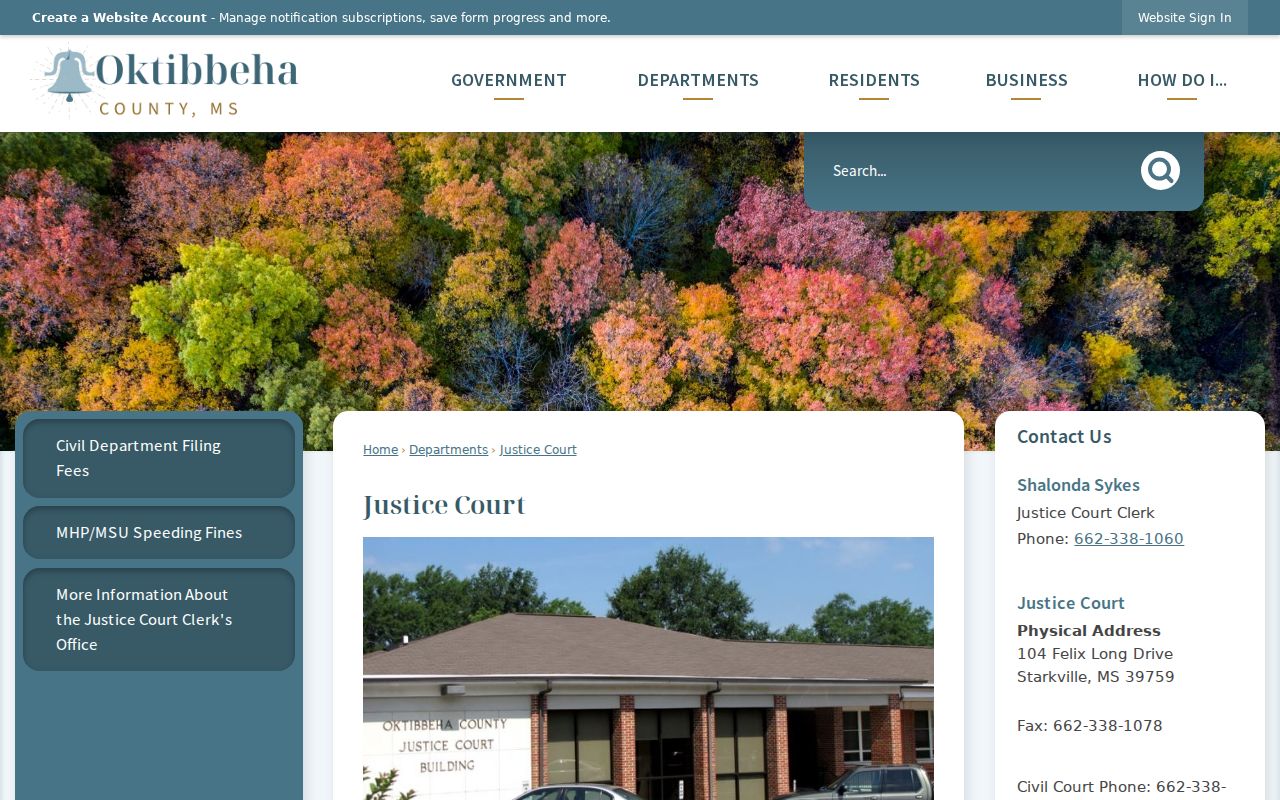
That Oktibbeha County route stays separate from the Circuit Court docket, which handles felony filings and any Circuit Court appeals.
Which Court Holds Criminal Dockets
Jurisdiction decides which Oktibbeha County court holds a criminal docket. Circuit Court tries felonies. It also handles appeals from county, Justice, and municipal courts. Justice Court covers misdemeanors, bonds, and the first appearances in a criminal case. Municipal courts take city ordinance violations, city traffic, misdemeanors, and early proceedings inside city limits.
| Case path | Likely custodian | First access route |
|---|---|---|
| Felony filing or Circuit disposition | Circuit Clerk | Delta or MEC lead, then Circuit Clerk |
| Misdemeanor, bond, or preliminary event | Justice Clerk | Justice Court clerk by district |
| Starkville city case | Starkville Municipal Court | City court and its citation system |
Oktibbeha County Circuit Court describes the Circuit Clerk's role with court records. The page also lists the court's resources. It posts the regular term schedule too. A term date alone never proves a case will be called that day. For real settings, the clerk is the place to ask. Treat the county Circuit page as the local starting point for docket and clerk questions.
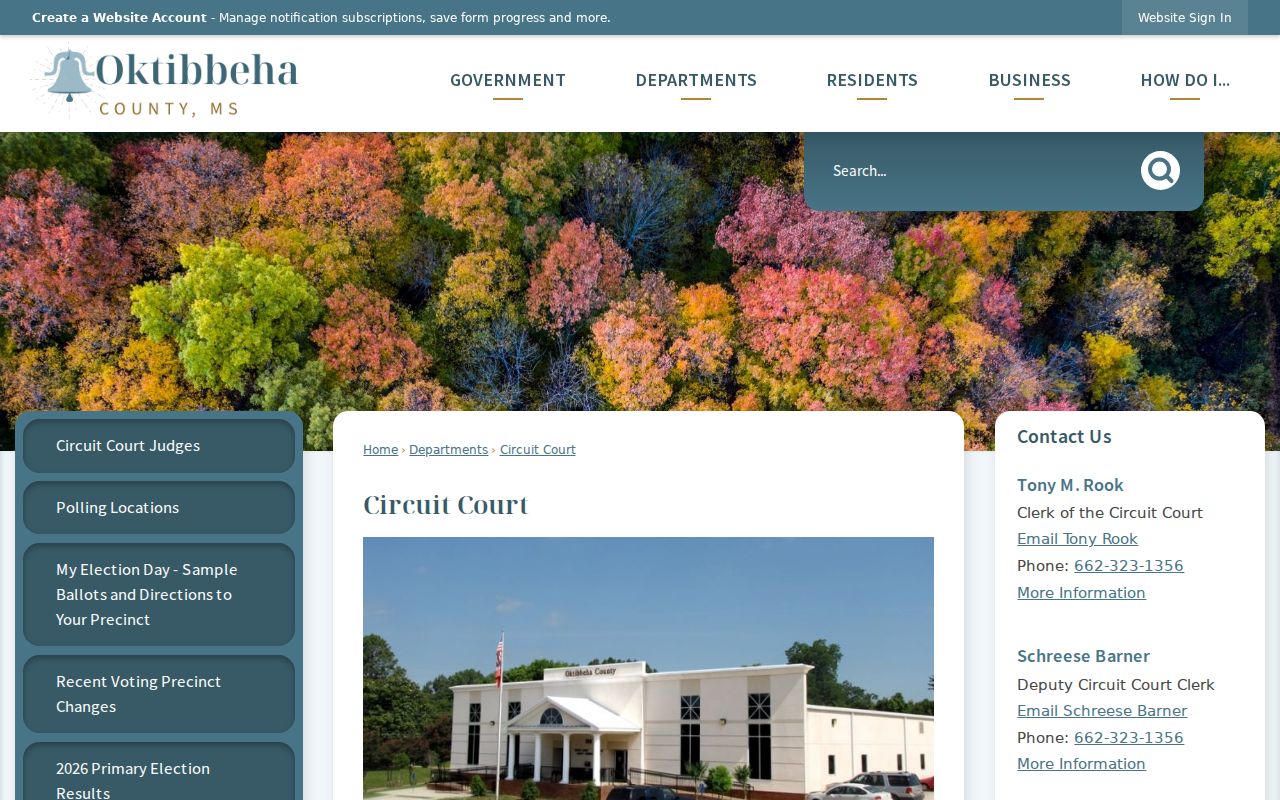
Always match the court named on the case record. That simple check keeps a lower-court matter from being read as a Circuit case.
Oktibbeha County Certified Criminal Copies
A docket label only goes so far. When you need the real thing, ask the court for the exact record. For a Circuit criminal matter, give the Circuit Clerk the case number. Add the party name if you have it, plus a date range. Make a clear request naming the docket sheet, the final disposition or order, and certification if you need it. The office sits at 108 West Main, Court Annex, Starkville, MS 39759. It posts weekday hours of 8 a.m. to 5 p.m.
The posted schedule lists a records search fee of $25 per name per record. Paper or printed pages run $1 each, and document certification is $1. Written requests require payment up front. Staff aim to act within seven working days after payment arrives. These charges are court-specific, so ask for the court fee schedule before you mail money. Say whether you want a plain copy or a certified copy. Search, copying, and certification are billed separately.
The county's Circuit Court Judges page posts the session pattern. It also shows why each setting still needs clerk verification.
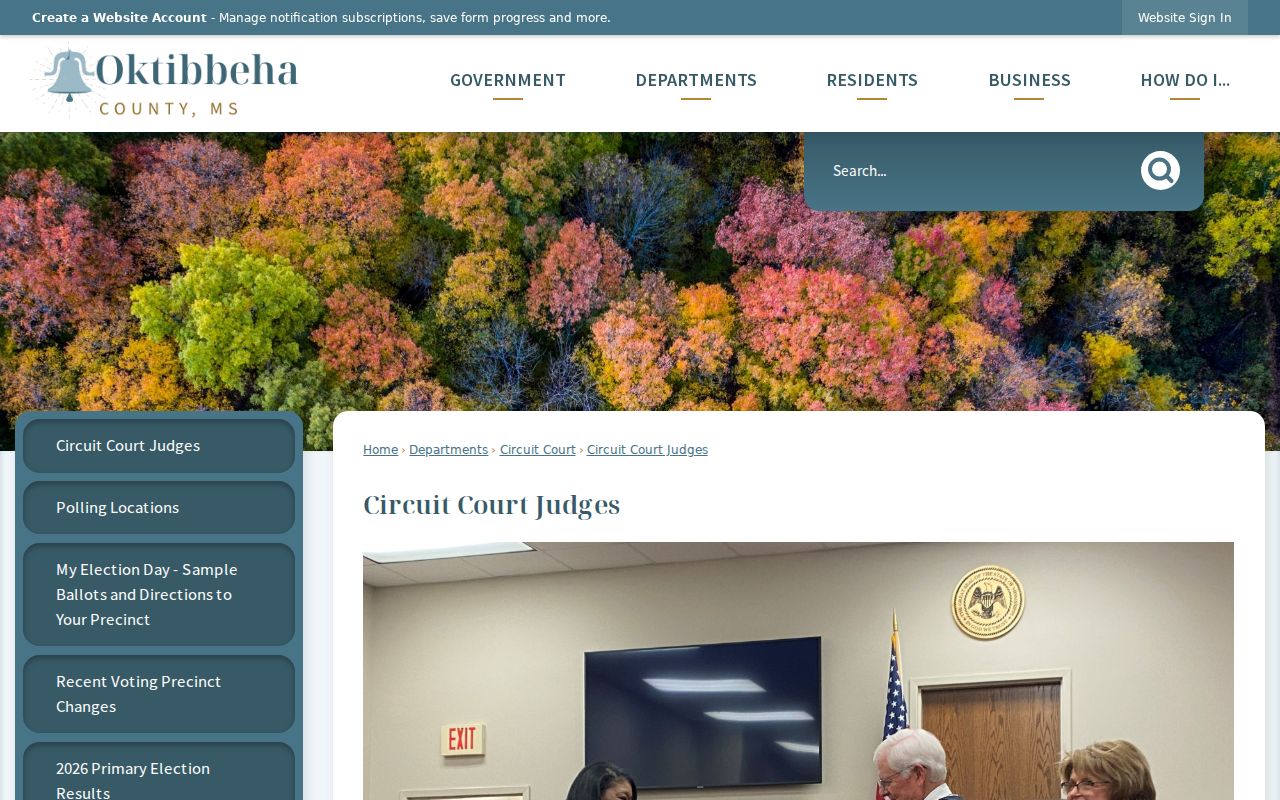
A court term is helpful for planning, but the Oktibbeha County clerk and the criminal docket still hold the case-specific record you need.
Public Access and Sealed Criminal Dockets
Mississippi's Public Records Act generally gives the public the right to inspect and copy court records, within exemptions and confidentiality rules set by each court. The Oktibbeha County clerk separates exempt material from the rest where possible. A public search will not open youth files, sealed documents, or expunged material.
Access rules to keep in view:
Mississippi Public Records Act information summarizes Miss. Code §25-61-5, including written procedures, response timing, and redaction of exempt portions.
Miss. Code §25-61-7 limits public-record charges to actual costs and permits advance collection of those costs.
Miss. Code §25-61-11 preserves confidentiality required by another law, and Miss. Code §43-21-261 protects Youth Court records.
MEC/PAMEC public access is read-only for anyone without an attorney account. Restricted or sealed files stay out. A result marked SEALED, EXPUNGED, or simply blank is not a reason to guess. Do not copy what sits behind it either. Ask the responsible clerk for the access rule. If it applies, request a redacted record or a written explanation.
Oktibbeha County MEC Access Limits
Do not mistake public MEC access for a free statewide criminal name search. PAMEC registration offers attorney, non-attorney, and firm-administrator account types. A non-attorney registration was listed at $10 annually. Eligible results carry a $0.20-per-page charge, including a one-page charge for a search that returns nothing. Paying online by card, debit, or e-check is usually faster than a paper check. Keep in mind that terms and charges can change.
The public account gives read-only access to docket sheets, notices, and electronic documents in eligible nonrestricted cases. Attorneys use separate MEC filing functions. Scraping and automated bulk collection are prohibited. So a manual docket search should serve a concrete court-record need. Even a paid electronic result should be checked with the responsible clerk when current status, a restriction, or a certified disposition matters.